Feeds:
Posts
Comments

Festive, flavorful and fast! You will love this new twist on traditional Linzer Torte.


Raspberry Lavender Squares - A New Twist on Traditional Linzer Torte

1 1/3 cups all-purpose flour

1/3 cup powdered sugar

½ teaspoon culinary lavender, finely ground

8 tablespoons unsalted butter, cold and cut in small pieces


½ teaspoon vanilla extract

1 cup red raspberry preserves

1 cup unsweetened frozen raspberries

¼ teaspoon culinary lavender, finely ground

1 tablespoon powdered sugar (for garnishing)

*    *   *   *   *  *  *   *    *    *   *   *   *   *

Preheat oven to 350F

Place flour and 1/3 cup powdered sugar, butter, lavender and vanilla extract in a food processor. Pulse to combine and break up butter into pea-size pieces.

Pour flour mixture into an 8 x 8 – inch ungreased baking dish, smooth into an even layer and tap with the back of a spatula to form a crust. Bake until crust begins to turn golden, about 20 minutes.

While crust is baking, combine preserves and frozen raspberries in a small sauce pan. Cook over medium heat until preserves turn to liquid berries are thawed about 3 to 5 minutes.

When crust is ready, remove from oven and pour raspberry mixture over top of hot crust and smooth into an even layer. Return the pan to the oven and cook for another 20 to 25 minutes until set. Remove from the oven and cool in pan until just warm. Cut into 25 squares, remove from pan and cool completely. When raspberry bars are completely cool, dust with remaining tablespoon of powdered sugar.

 Merry Christmas and Happy Holidays! 


Lavash and Lavender Seasoning Together at Last

“Have you ever made lavash?” asked my friend, Mike Neustrom, lavender grower from Kansas.

“Lavash?” I said, “What is it?”

 Then like a game-show contestant trying to respond before the buzzer, I burst out, “Wait. Is it a type of cracker or flatbread?”

Mike said he’d been wondering how it would taste with lavender seasoning. I could not resist this culinary challenge and pledged to find out.

My first surprise came when I looked through my 1970’s “Joy of Cooking.” The index didn’t list “lavash”, however when I searched for “flatbread”, I found a description (“Armenian, Greek, Arab, Syrian, Euphrates Bread”) along with a recipe. More questions entered my mind, such as where and when this bread originated, how it was first made and what role did it serve in the country’s cuisine.

Further research revealed the answers to these questions. Flatbreads date back nearly 10,000 years. Grain mashed and mixed with water or milk created dough that became the earliest form of bread. The dough was rolled thin and cooked over high heat.  The quick cooking time preserved scarce fuel. This method of converting grain into bread provided a durable and portable source of nourishment throughout the winter.

Many countries developed their own version of flatbread. Lavash originated in Armenia in the Caucasus.

Seattle Public Library - Books about Armenian Cuisine

Other flatbreads are: Matzo in Israel, Lefse in Norway and Naan in India. In the United States, Americans eat English muffins, soda crackers and pretzels, descendants of ancient flatbreads. For a complete list, check out Harold McGee’s book, “On Food and Cooking.

Where did lavash get its name? It’s an Armenian name with two parts. The first part “lav” means “good”. And “ash”, the second part, means “food, meal”. When joined, the meaning is “good food”.

In pursuit of a lavash recipe, I turned to the internet. Googling “lavash recipe” returned more than 600,000 hits including a recipe on All Recipes and a link to a “Lavash-Making Challenge”. 

After browsing for a bit, I settled on the lavash recipe posted in the All Recipes website. I selected this one for two reasons: 1.It met my criteria for an unleavened version (no yeast and on baking powder) and 2. Readers gave it rave reviews and offered tips for baking and serving.

Lavash recipe in hand, I was ready to bake. First I took a quick trip to the grocery store to see whether they sold lavash. The day before Thanksgiving, the store was buzzing. Extra employees were helping shoppers. I found one and asked, “Do you sell lavash?” My second surprise that day was when the woman responded, “Yes, follow me.” She led me to the artisan breads and handed me a box of crackers.

Lavash from the Grocery Store - $6.29

I was shocked at the price of $6.29 – for a box of crackers, really? Yes, I bought them, but only because I wanted to compare “store-bought” to “home-made”.

 The ingredients in lavash couldn’t be more basic: Flour, water, sugar, salt, egg white and butter. I mixed the ingredients together into a sticky dough, and then turned it out onto a floured surface, where I kneaded it for 5 minutes. The dough was smooth, soft and stretchy. I inhaled  the bread-like aroma. I cut the dough into 10 portions, and covered them with a damp paper towel. I picked up one of the balls and patted it into a disc, and then began rolling it. I tossed it around and rolled it until it was as thin as a tissue. I carefully lifted the dough onto the baking sheet, brushed it with egg white and sprinkled seasoning on top. I used Tuscan Seasoning, a recipe from my book, “Discover Cooking with Lavender.” Other seasoning options include: Herbes de Provence, basil, sesame seeds, poppy seeds, sunflower seeds, caraway seeds, cayenne pepper, garlic salt, cumin or sea salt. I slid the baking sheet into the hot oven and felt a connection with ancient times.

Soon the aroma wafting from the oven and filling my kitchen awakened my appetite. I peeked into the oven; the lavash was golden with tiny dimples and puffy bubbles looking like a sun-drenched moonscape. I removed the lavash from the oven, letting  it  cool on a rack. I broke off a piece and put it in my mouth. It tasted warm, rustic and comforting; I tasted the fresh herbal flavor of the lavender and pungent tones of onion and garlic. In my refrigerator, I found sun-dried tomato goat cheese to spread on the lavash.

Lavash - Hot out of the Oven

 I was savoring every moment of this private tasting experience, when I glance over to the kitchen counter and saw that I still had lots of lavash to bake. The recipe makes enough for a crowd, and it was not surprising to discover home-baked lavash surpasses the store-bought version in every way – better flavor, less cost, healthier and more seasoning choice.

 Lavash, not only simple, cheap and filling, gives the creative cook a blank canvas  to showcase aromatic herbs, nuts, seeds, spice and artisan salts to create a flavor masterpiece. I’d recommend serving it with humus, olives, feta and other soft cheeses or salsa. Extremely versatile, lavash can be served as a pizza crust, wrap, dessert cookie or cracker or even an eating utensil to scoop up stew, kabobs or as a plate for rice, beans or vegetables.

So to my friend Mike, I can now report, “Yes and yes: I’ve made lavash, seasoned it with lavender and the entire experience was sensational. Thanks for asking!”    

Lots of Lavash!

- – - – - – -

Tuscan Seasoning                                    

Mix this seasoning with butter or olive oil and spread on a fresh baguette

for delicious lavender garlic bread.

 ½ cup roasted lavender (place culinary lavender buds in hot, dry skillet for about 1 minute, stir until buds are slightly toasted)

¼ cup dried onion flakes

¼ cup dried minced garlic

1 tablespoon salt

 Place all ingredients in a food processor or blender. Process for 10 seconds or until all ingredients are well blended.

  1.  Store seasoning in an airtight container.

——————————————–

p.s. As I was completing this post, I discovered two other lavash products on the market:

Celebrating Cecil

Cecil Clark - Family Man (July 1949) - Stoneham, MA


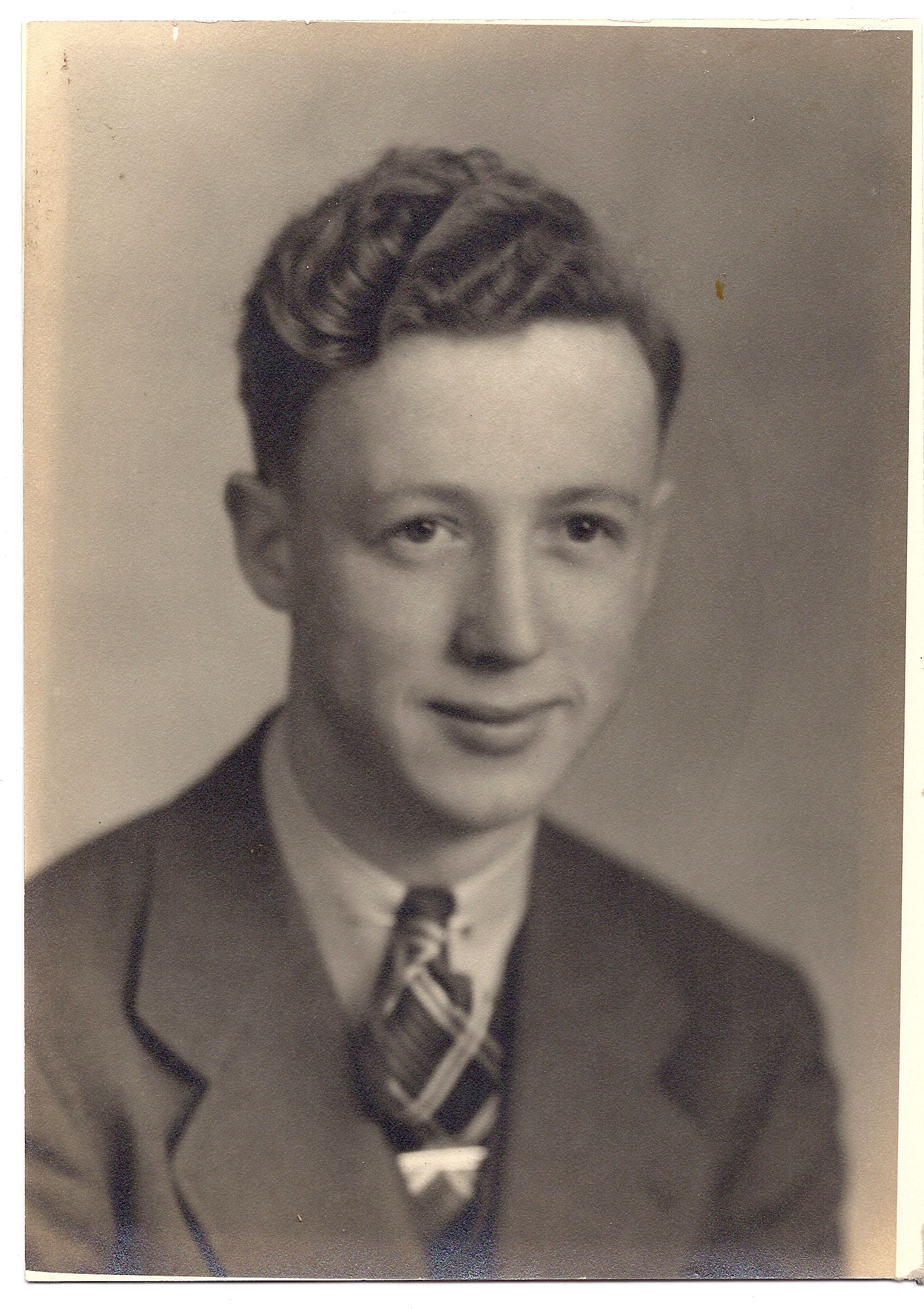
My dad, Cecil D. Clark, was born on this day in 1920. His November birthday was linked permanently with our family’s Thanksgiving celebration. In some years these events coincided date-wise, however whether they did or not, dad’s birthday was always celebrated on Thanksgiving Day. It’s been more than sixteen years since dad’s been gone. And yet, whenever Thanksgiving comes around, he’s in my thoughts.

This year when I reflected on the years we spent together, I couldn’t help feeling sad that I did not have more time with him. I knew him for only 50 years, beginning in 1946, the year I was born. Most of that time, I was too focused on myself to have learned much about him. That’s why I’m grateful he wrote “The Life History of Cecil Clark”, even if he only completed the first chapter.

Cecil Clark High School Graduation June 1938

Cecil Clark High School Graduation June 1938

In these 43 pages, he recalled his life from his earliest memory of attending Kindergarten in Watertown, South Dakota and concluding with my birth in July 1946. Between those two events, he graduated high school, joined the army, fell in love and married, fought in WW II, returned home to his wife and first baby and began civilian life in Boston, Massachusetts. Without his written account, I don’t know how I would have discovered these details.

When we gathered for Thanksgiving last week, my sister Jean, shared photos and other memorabilia about our dad. This material provided additional insight about his boyhood and early adult years. I discovered  my father’s persistent passion for cooking, baking and food preparation. I always knew he was comfortable in the kitchen, but what I learned is his passion for food emerged at a young age and continued throughout his life.

  • My dad worked evenings in his parent’s restaurant in Richardton, North Dakota in 1936.
Clark’s Lunch Counter – June 17, 1936
  • In 1941, my dad joined the United States Army and trained as a cook. He wrote, “I continued to cook all summer 1941, and thoroughly enjoyed it.”
  • He became the mess sergeant of the battalion and “was to order or purchase the foods, prepare the menus and supervise the preparation of the meals, along with seeing to the cleanliness of the kitchen and the mess hall.”
  • He met my mother in Springfield, Massachusetts and wrote, “…we usually went out for something to eat … and sometimes to the Waldorf Cafeteria for English muffins and coffee.”

    Sergeant Cecil Clark, United States Army 1943

    Sergeant Cecil Clark, United States Army 1943

  • Returning from WW II in Europe, my dad enrolled at Northeastern University as a college student. To support his family, he worked as a pastry chef from 6 p.m. to midnight. He “found a job …with a restaurant chain …working in their bakery .. rolled out pie crusts, filled the pie shells, baked them. Mixed the cake batter, made the puddings.”
  • When I was a girl, dad cooked up his signature dish (and one of my favorites) “Onion Gush Gush” – basically scrambled eggs with chopped onion cooked in lots of butter.
  • On weekends, mom and dad made English muffins and deep-fried donuts.
  • Fresh fruit and vegetables thrived in our backyard garden.
  • Dad was an adventurous eater. On a three hour layover in Chicago in the late 50’s when we (dad, mom and their five daughters) traveled by train from Tacoma to Boston, Dad hailed a Checker Cab. We went to a downtown restaurant for a quick lunch. Dad ordered turtle soup.

Now that I think about it, Thanksgiving is the perfect time to celebrate Cecil. And although, I don’t think he ever cooked with lavender, I know he’d be proud that I’ve carried on his passion for food, flavor and cooking.

When someone invites us to join them for Thanksgiving dinner, I like to bring something special. This year I’ve made tasty packages of  Candied Walnuts with Lavender and Figs. I’m excited to share my special treats.

The recipe is a variation on one from 101 Cookbooks. I love this recipe because it is easy, flavorful and nutritious. Yes, it does have a whole cup of brown sugar, however the nutrients provided by the walnuts more than make up for the sugar.

Walnuts

Walnuts : They're all they're cracked up to be and more!

Whenever I read a recipe calling for rosemary or mint, I  think about using lavender instead. Most times, it works beautifully and adds an exotic taste.  So when I read Heidi’s “Brown Sugar Rosemary Walnuts Recipe,” I wanted to try it with lavender. I also thought about substituting dried plums or apricots for dried figs, however I love figs so that is what I used.


For packaging, I dropped by Seattle’s PS-Store to pick up plastic containers, ribbon, labels and stickers. I love the square labels with the colored borders. In the past, when I’ve made gift packets, I’ve struggled with labels. Frequently, labels can be difficult to line up on my printer, and I get frustrated. These worked like a dream. I went to this link to get a template compatible with MS Word. I typed in the text and hit the print button. It all worked the first time. I used a 2” x 2” label. The container was 3” x 3” x 3”. I used a clear round sticker to seal the container, I tied a ribbon around it, tying a bow on top. PS-Stores sell an artificial lavender sprig that looks nice. The lavender sprig looks great on the package.

See the Lavender Sprigs: Perfect for Gifts!

Walnuts - All Sugared and Spiced

Sugared and Spiced: Walnuts are Ready for Someone NIce!

I cooked up one batch of this recipe yesterday afternoon in about 5 minutes. They baked in the oven for another 25 minutes, and I turned the oven off and just let the nuts dry out a bit more. When they were cool, I created my gifts. I created 5 gift packages.


Candied Walnuts with Lavender and Figs

1 cup brown sugar

2 teaspoons fine grain sea salt
1 teaspoon ground culinary lavender buds*
1/4 cup sesame seeds
2 large egg whites
1 lb cups shelled walnut halves
1/3 cup chopped dried figs, stems trimmed

Sugar and Spice - All Things Nice

*What variety works best? I like Royal Velvet; however any English Lavender will be fine.

*How to grind? Use spice grinder, mortar and pestle or a clean coffee bean grinder will work too!

Preheat oven with racks in the center to 300F. Line two baking sheets with parchment paper.  Combine brown sugar, salt, lavender and sesame seeds in a small bowl.

In a large bowl whisk the egg whites a bit, just to loosen them up. Add walnuts and figs to whites and toss until they are evenly coated – it’ll take a minute or so. Sprinkle the sugar-spice mixture over the nuts and toss (really well) again.

Split the nuts between the two prepared baking sheets in a single layer, separating the wa;nuts from one another.

Bake for ~25 minutes or until the walnuts turn golden brown  and the coating is no longer wet. Turn off your oven and let them dry for 10 minutes.  Cool for a few minutes, and then slide the parchment/nuts off the hot baking sheets onto a cool surface to cool completely. These will keep for a week or so in an airtight container.

Makes 1 pound of nuts

Prep time: 5 min – Cook time: 25 min


Red Barn in Field of Lavender

Sunshine Herb & Lavender Farm during 2011 Sequim Lavender Farm Faire

During Sequim’s lavender celebration, I visited Sunshine Herb and Lavender Farm to demonstrate some recipes from my book, “Discover Cooking with Lavender.” Busy talking and signing books, I didn’t have time then to discover the story behind this place. I barely noticed the lavender plants lined up like soldiers in a parade and saluting their fans with purple flowered stems.

Months later when Scott Nagel called to invite me to speak at the upcoming International Lavender Conference (April 2012), I became curious about how Sunshine Farm became a tourist destination for thousands of people from all across the country and beyond.

Summer at Sunshine Herb & Lavender Farm

Picture Perfect

Agritourism is emerging as a popular way to see working farms, to understand local agriculture and to discover regional cuisines. Sunshine Farm has achieved success in this new industry. I wanted to learn what made this farm so popular.

To find out, I returned and spent an early October morning with the farm’s owners, Steve and Carmen Ragsdale. I learned that their formula for success depended on their planning, preparation and passion. Their top ten tips are listed below.

1.      Do your homework. Set your goals. Prepare a business plan. Get help if you need it.

  • To help them develop their plans and meet their goals, Steve and Carmen engaged the volunteers at SCORE – a free consulting service that is part of the Small Business Administration.
  • Their goal was to own and operate a lavender farm that would attract tourists.

2.    Build on your experience, skills and personal style.

  • Carmen owned and operated beauty salons for 38 years. She had experience creating products using herbs and oils, and she was skilled in customer service.
  • Steve, a naval architect and engineer, understands machinery and planning.
  • Even before they devoted themselves to Sunshine Lavender, Steve and Carmen grew lavender on the hillside of their Port Orchard property.

3.    Take one step at a time.

  • The Ragsdales acquired their property in 2000 and developed their farm in phases: Finding the site, preparing the soil, planting lavender, building greenhouses, propagating plants, creating products for their gift shop, and in 2006 their farm became part of the Sequim Lavender Farm Tour.

4.    Select the right site. For lavender, that means soil that is well-drained and slightly alkaline and a site that offers full sun. If you intend to attract visitors, look for a site that is visible and easily accessible. Check out zoning laws and permit requirements.

  •  After searching for two years, the Ragsdales found their 10 acre site, just off highway 101, about 10 miles east of Sequim. Their farm is the first one you see when you drive towards Sequim.


Sign for Sunshine Herb & Lavender Farm

This Great Sign Makes it Easy to Find Sunshine Herb & Lavender Farm

5.    Make sure your signs are easy to read, and your farm is listed in visitor guides, tourist attractions and in local papers.

  • A large sign makes it easy to find Sunshine Herb and Lavender Farm. Commanding attention, the big red barn and white picket fence can be seen from the highway. In summer, the purple rows of lavender beckon to passersby.

6.  Remember your farm is a stage. Keep it looking neat and uncluttered. Make it inviting, with clearly marked paths, places to sit so your guests can relax and take in the beauty.

  • Sunshine Herb and Lavender Farm reminds me of a palace garden. Carmen and Steve understand they are in the agritourism business, a blend of agriculture, tourism and entertainment. Their visitors expect an unforgettable experience. When you walk around this place, you  feel like you’re in paradise.

    Colorful Andirondack chairs offer place to rest

    Adirondack Chairs Invite Visitors to Sit and Enjoy the Lavender

7.    Make sure your plants look their best. That means replacing plants that become stressed. Lavender is the star of the show, every plant must look lush!

  •  This fall, Steve, Carmen and family  will replace 4000 plants with ones they propagated in their greenhouses. This takes all hands on deck.  (The stress was due to excessive rain in 2011. Due to la Nina weather pattern, in 2011 Sequim received over 60 inches compared to an average of only 15.)


Lavender Season at Sunshine Herb & Lavender Farm

Lavender Season at Sunshine Herb & Lavender Farm

8.    Place signs in the lavender fields describing the different varieties giving a brief summary of its characteristics.

  •  Sunshine Herb and Lavender Farm has more than 8000 lavender plants in its fields with some 65 varieties. Visitors can easily read about the various types and learn about their size and color.


Melissa - Angustifolia Cultivar - Thriving at Sunshine Herb & Lavender Farm

Melissa - Angustifolia Cultivar - Thriving at Sunshine Herb & Lavender Farm

9.    Develop a unique and attractive array of gift items.

  • Carmen began developing bath and beauty products when she operated her salon. Now, she creates soaps, face creams, hand lotion and more using the lavender oil that Steve distills from their harvest. What lavender oil they don’t use in their products, they bottle and sell in their gift shop.
  • By tweaking family recipes and experimenting with lavender in the kitchen, Carmen wrote three cookbooks. In the gift shop, she offers her own line of culinary products from culinary lavender buds to salad dressings and seasonings.

10.   Have fun. Don’t get too busy to stop and smell the lavender.

Steve and Carmen Ragsdale with their dog, Sugar

Steve & Carmen along with their dog, Sugar

  • Steve and Carmen enjoy working together and caring for their farm and it shows in the relaxed atmosphere that makes Sunshine Lavender such a special place.
  • Taking a leadership role in the lavender community, Steve has been elected president of the newly formed Sequim Lavender Farmers Association. The association is hosting an International Lavender Conference in 2012. The keynote speaker will be Tim Upson, author of “Lavandula, The Genus” considered the bible for lavender growers.

Agritourism, still an emerging industry, comes in many forms. Wine-tasting, corn mazes, pumpkin patches and Christmas tree farms attract people who want to escape from their everyday routine and get a glimpse of another world. At Sunshine Herb and Lavender Farm, visitors discover the beauty of lavender and enjoy the gracious hospitality of Carmen and Steve Ragsdale.


Lavender Infused Wine? Really?

Le Melange Noveau

Le Melange Noveau - "A New Blend"

When I learned that Olympic Cellars had created a lavender-infused wine, I was skeptical. Yes, I adore lavender and I also appreciate wine. However when it comes to using lavender in food or drink, I’ve found that a little goes a long way. Use too much and what should be a delicately flavored dessert reminds me of an over-perfumed aunt or a bar of soap.

What piqued my interest was the noble attempt to create a wine that celebrates the flavors of the Olympic Peninsula. Sequim, after all, is well-known as “the lavender capital of North America.” And grapes grown in the relatively cool temperatures of the Olympic Peninsula’s coastal climate are especially aromatic bringing citrus notes to the palate.

Around 2006, a few local vineyards began harvesting Madeleine Angevine and Siegerrebe grapes. According to Kathy Charlton, owner of Olympic Cellars, “the local vineyards and our lavender fields started coming together first in conversation, and later in a new local wine.”

Olympic Cellars’ winemaker then, Benoit Murat, created the wine using locally grown grapes. And Charlton, along with her business partner and tasting room manager, Molly Rivard, experimented with infusing the wine with locally grown culinary lavender. The lavender buds were wrapped in cheese cloth and added to the wine. After 4-6 hours, the lavender was removed. “We went through this process until the bouquet included the lavender and there was the barest change in taste.”  She emphasized, “We were not trying to overshadow the wine and were not aiming for the wine to taste like lavender.” Pleased with the result, Olympic Cellars named their new “baby” Le Mélange Noveau (French for “A New Blend”). The first limited vintage (2006) produced only 28 cases.

Drinking wine with food ideally enhances the dining experience. Pairing food and wine can be complicated. So experts use the expression “What grows together, goes together” as a rule of thumb. Crab, salmon, clams and oysters, organically grown fruit and vegetables and artisan creameries all contribute to the rich and diverse flavors that have become known as Olympic Peninsula cuisine. With the introduction of Le Mélange Noveau, a local wine is now available to complement the region’s food.

Last month, I bought a couple of bottles of Le Mélange Noveau 2010. Because the spring and early winter were cooler than usual grapes on the Peninsula did not ripen, the 2010 vintage was made with Mueller-Thurgau grapes grown in the Columbia Valley. This varietal was selected because the vineyard was located on a cool temperature site and the grapes mature in the same way as the ones grown on the Olympic Peninsula. The wine is sold sale at Olympic Cellars off U.S. Highway 101 between Sequim and Port Angeles. You can also buy the wine at their online store. Only 150 cases of Le Mélange Noveau (2011 Vintage), was produced, so you may want to get a bottle while it’s still available. (Cost per bottle is $14.99)

In Seattle on a hot September afternoon, my writing group sat around my dining room table. Although we don’t make a practice drinking wine at our weekly meetings, I invited members to participate in a wine-tasting session. I opened the ice-cold bottle of Le Mélange Noveau and poured a taste for everyone. The label, a picture of white grapes with a lavender bouquet, made me think of late summer.

The white wine sparkled in the afternoon sun. The room became quiet.  Each of us experienced the bouquet and then our first sip. Like a group of connoisseurs, we began describing the wine with words such as “crisp,” “dry,” “light,” “refreshing.” Then, “I can’t taste lavender,” “I like it,” “A perfect summer wine,” “I detect a citrus taste,” and “This would be great with a fruit salad.”

Although I still consider myself a purist when it comes to wine, I would proudly serve this wine for a summer brunch. My taste buds come alive as I visualize a table with fresh berries, goat cheese, muffins and crab & asparagus Quiche served with the dry and delicate, Le Mélange Noveau.

Kudos to Olympic Cellars! They got this wine exactly right. When it comes to lavender, less is always more!

Bruschetta – My Way!

raspberry and Strawberry Bruschetta. Who doesn't love a quick and easy dessert?


 Step 1: Slice Baguette into 1/4 inch pieces. Butter each side of the bread. Place in skillet over medium heat. Toast until golden  brown, then turn and toast the other side. This takes about ten minutes. 

Baguette Sliced and Buttered on both Sides, toasting in Skillet


Golden Brown on One Side, the Other Side is Still Toasting.

 
Step 2: Turn off the heat and place a square of chocolate (dark, white or whatever you like) on each baguette slice. 
Chocolate Square on Each Bread Slice

Place a Square of Dark or White Chocolate on Each Slice of Bread

Leave the bread in the skillet. Cover with a lid and let sit for 5 minutes to let the chocolate melt. 

Chocolate Melted and Ready for Berries

When the chocolate becomes soft. Take a small knife and spread it over the bread.
 
Step 3: Move bruschetta slices to platter, and cover with strawberries or raspberries. Sprinkle with sliced almonds and fresh lavender blossoms.

 That’s it! It’s ready to bring to the table.  My kind of dessert: 

Elegant, easy and exotic.   Enjoy!
Berry Bruschetta with Lavender

Berry Bruschetta for Dessert


I’ve Got Mail!

 
I was drinking a latte and writing, when I heard the sound of mail dropping into my mailbox. Even though, I have a strict rule about not interrupting my morning ritual of writing, I could not resist. I opened my mail box and retrieved my mail – a few fliers, a couple of bills and a postcard announcing a big lake-front house for sale – only $4.5 million. 
 
Then I suddenly wanted to check the front porch. I was expecting a package from Olympic Cellars. So when my eyes landed on a large tubular package, I thought, “Great my wine has arrived.” But then I looked closer and saw the label–”Labyrinth Hill Lavender.”  How exciting!
 
I picked up the package and brought it into my kitchen. When I opened the carton, I could see pink tissue wrapped around a bundle. I pulled the precious bundle out of the carton. It was tied with a purple satin ribbon.
 
 
 I unwrapped the pale pink tissue. The bunch of lavender filled my kitchen  with fragrance and my heart with appreciation for friendship, beauty and summer.


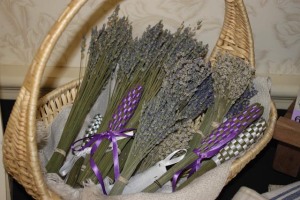
How exquisite!  A fresh and fragrant bunch of lavender. I recognized it immediately as Grosso – long-stemmed and a rich full fragrance.  Grosso is grown for its oil content, and its fragrance is intoxicating.
 

"Lavender, Sweet Blooming Lavender"

"Lavender, Sweet Blooming Lavender"

Thank you, Susan!  What a sweet surprise! I love your “Care and Feeding Instructions” for my new “Bundle of Joy” and the tutorial on how to weave a lavender wand.

Dwarfed by a Giant

Since I wrote my book, “Discover Cooking with Lavender,” I’ve learned behind every book, there’s a story with twists and turns, challenges and breakthroughs and plenty of hard work. That’s exactly what fascinated me about “As Always, Julia – The Letters of Julia Child & Avis DeVoto.”

Everyone has heard of Julia Child, her masterpiece, “Mastering the Art of French Cooking,” and her popular television program; but what I learned and loved about this book is how Julia stepped onto the culinary stage and became a legend in the culinary world.

“As Always, Julia – The Letters of Julia Child & Avis DeVoto” gives us a glimpse of their friendship through their own words. These letters reveal how over a ten-year period, Julia persistently worked at “cookery and bookery,” dealt with setbacks, received encouragement from her mentor Avis DeVoto

, and finally in May 1960 got word that her book proposal had been approved by Knopf.

 As I read the letters of Julia and Avis, I felt inspired by their friendship. Their correspondence tells of recipe-testing, technique trials and the search for clear and understandable descriptions. I could relate to the tough choices about which recipes to include, or how to explain rare ingredients, or how to specify details such as best pan size. How often do you read a book that changes your life? I’m adding these five life lessons into my recipe for success.

"As Always, Julia: The Letters of Julia Child and Avis DeVoto

   1. Be generous. When you can help someone, don’t hold back.

In 1952, more than half a century before Facebook, Julia Child responded to a journalist, Bernard DeVoto, who ranted against the American kitchen knife. Julia, living in Paris then, sent him a carbon steel paring knife. That act of kindness was the beginning of a lifelong friendship between Julia Child and his wife, Avis DeVoto.

An excerpt from Julia’s March 8, 1952 letter to Bernard Devoto:

“Your able diatribe against the beautiful-beautiful-rust-proof-edge-proof American kitchen knife so went to my heart that I cannot refrain from sending you this nice little French model as a token of my appreciation.”

The journalist’s wife, Avis DeVoto, responded with a letter of thanks. Like many of today’s Facebook “friends,” Julia and Avis corresponded for nearly three years before they finally met one another in July 1954.

   2. Collaborate with people who share your passion.

Excerpt from Avis DeVoto’s letter of March 20, 1953:

“I made a beautiful omelet for my lunch with chives and parsley, but I still have to use a spatula to make it roll. We are going to have poached salmon with beurre blanc for dinner. Honest to God, Julia, you have brought a revolution into this household. I wholly expect the completed book to cause a real revolution.”

   3. Focus on quality, and keep your standards high.

Julia Child - She Never Gave Up!

Julia focused on doing her very best while she worked on her book. This excerpt is taken from her February 12, 1953 letter to Avis.  

“I am determined that this book is to be as perfect as we can possibly make it; and that every point in the basic explanations is to be absolutely mastered and masterfully explained. I think the Sauce chapter is on the whole, a damn good job, and sets us a pretty high standard for the rest . . . which must be even better.”

This excerpt is taken from her February 6, 1955 letter to Avis.

“There will be so many things to come out ahead of us, I refuse to worry, but I want very much to study everything that does appear, so we can try to better it … Which I think we can in many instances. But . . . we weren’t born into the trade, more’s the pity. Had we started in at 12, apprenticed to a good master, we would be far ahead of where we are now. But we also have the advantage of being housewives, which gives a different approach.”

4.   Never give up.

Julia Child worked on her book for ten years. In Paris, she began her formal culinary education at Le Cordon Bleu in 1949. She found friends who shared her interest and perspective on food. In 1952, Julia, along with two friends, taught cooking classes. The three women teamed up to create a cookbook. The book was published in October 1961 by Knopf. By August of 1962, 100,000 copies were sold and by 1974, sales rocketed to 1.4 million books.  Julia’s television series, “The French Chef,” was broadcast between 1963 and 1966. In 2009, the film “Julie and Julia” attracted more attention to Julia Child and her book, “Mastering the Art of French Cooking.” Book sales soared. Today this book is considered one of the most influential works in American cookbook history.

5.  Lighten up and be playful.

These women had fun and adopted a playful approach. When I read their letters, and noticed how they lightened up the moment with a chuckle here and there, I realized their light-hearted style added fun by spicing up everyday lives. I will give you several of my favorite examples.

From Julia’s letter to Avis on January 5, 1953:

“I can’t tell you my emotions of love and gratitude for all your interest and hard work on behalf of our book; you display the true marks of a Great Gourmande . . . which always includes the warmest and most generous of natures . . . and is why people who love to eat are always the best people.”

From Julia’s letter of November 2, 1955:

“Certainly don’t want any photos of us on our book, we’ll be too old by that time anyway, and besides I don’t think it helps the appetite and might hurt the sales.”

Avis DeVoto "Foster Mother, Wet Nurse, Guide and Mentor"

From Avis’s letter of February 8, 1953:

“Now that I know Paul {Julia’s husband} is a photographer, I have a definite request to make. (Don’t for the love of God send me any more French cookbooks. …) I want Paul to take a photograph of you at the kitchen stove. With or without decorated fish.”

From Avis’s letter of February 27, 1954:

“You know, it’s funny. By the time we develop real taste in food, and begin to learn how to prepare it, digestive disorders set in and weight piles up. When I think what I could have done in my youth, when I ate like a horse with no bad results at all, with the knowledge I am getting now, I could cry.”

English Lavender

English Lavender on the High Plains of Kansas

Mike Neustrom began his career in the U. S. Navy serving as a diplomatic liaison with U.S. embassies and consulates in foreign ports. Now he grows lavender in Kansas on Prairie Lavender Farm. Check out his website. When you see the images of the neat “ship-shape” rows of lavender growing on his farm, it is easy to imagine him in his navy uniform. Mike now applies the discipline and organizational skills he learned in the Navy to growing lavender.

Mike Neustrom of Prairie Lavender Farm

Mike Neustrom of Prairie Lavender Farm

Prairie Lavender Farm, founded in 2002 on the high plains in north central Kansas, is home to 3500 lavender plants. Situated on 6 ½ acres on the south side of a hill above the Dakota Aquifer, the growing conditions match lavender’s three requirements: full sun, well-drained, alkaline soil. About half of the lavender plants are Lavandula angustifolia varieties, (sometimes called English lavender), the rest are Lavandula x intermedia (hybrids). Prairie Lavender Farm has lavender blooming from June through October with as many as four or sometimes five cuttings.

Mike retired from the Navy plus one more career before lavender began its campaign to win his affection. Mike was seduced by lavender at a roadside market. “By shear accident, I’d gone by a little roadside farmers market in Salina, Kansas. I noticed herb plants for sale. I ended up buying four or five flats of lavender, took them home and planted them in rows,” Mike said. That was how it began.

Lavender fascinated Mike. He wanted to find out where it fit in the botanical world, its history and how the herb was used. 

When Mike went to visit his sister Carole near Austin, Texas, he met Sharon Shipley, author of “The Lavender Cook Book” and coincidentally, Carole’s business partner. Sharon was in Austin to speak at the first Southwest Lavender Conference. Mike attended the conference where he met lavender growers and lavender nursery owners. When he returned to Kansas, he had several hundred Buena Vista lavender plants from Cathy and Sam Slaughter’s Gabriel Valley Farms.

Fresh Bunches of Lavender

To learn more about lavender farming, Mike traveled to Idaho and visited with Al and Peggy Armstrong at their Valley View Farm. He asked them about harvesting, making and packaging products and marketing.

After running Prairie Lavender Farm for the past eight years, Mike still enjoys this labor of love. I caught up with him via telephone last week. He’d just closed his gift shop for the day, and agreed to talk to me about his farm. Earlier that day, he’d hosted two large groups. An RV group, 22 people in all, had stopped by to see the lavender in full bloom on this June day. They’d been at the Kansas Smoky Hill River Festival and had heard about Mike’s farm from a nearby winery. Many people discover Prairie Lavender Farm by “word of mouth.”  Mike said, “I take them out, show them the fields, talk about the history and tell them about the farm.” Later that day, another group of 50 people came up from Wichita for a walk through Mike’s fragrant fields and a visit to his gift shop.

Once, a group of wheat farmers visited the farm. “You know they were dragged out here by their wives,” Mike said, “and they were fascinated with growing and farming aspects. I told them that they quit too early.” On this farm, Mike doesn’t quit until all the lavender is grown, harvested, distilled, dried, and then used to make products that are sold in Prairie Lavender Farm’s gift shop, online or at several retail shops.

Farm Gift Shop

Lavender Farm's Gift Shop

“We make everything on the farm,” Mike added. “I want to know what goes into every one of my products.” Best selling items are Prairie Lavender Room Spray,  Premium Lavender Body Lotion and Lavender Body Butter. He has developed 80 products, all using lavender.

Mike loves to cook with lavender. His favorite variety for culinary use is Buena Vista.“I like its sweet flavor. Some people use Provence, however I prefer Buena Vista for its taste,” said Mike. The herb blend, herbs de Provence, is the seasoning he sprinkles on chicken, pork or fish. Mike cooks chicken seasoned with herbs de Provence in a crock-pot and loves the delicious aroma that greets him when he comes in from the farm for dinner.

This Saturday, June 18th, Prairie Lavender Farm hosts its 3rd Lavender Festival. Here is a list of activities.  Sounds like a great way to spend the day!

  • Tours of our farming/processing operation
  • Demonstrations
  • Lectures on growing lavender
  • Making lavender gifts
  • U-pick bundles
  • Lavender plant sale
  • Live music & art
  • Gift shop open all day

As my conversation with Mike came to a close, I asked Mike what he likes most about his career as a lavender grower. Mike paused, “I am happy to say ‘I haven’t had to sit through even one meeting over the last nine years.’”  Who could have guessed that a twenty-year career in the navy would be the perfect preparation for creating a successful lavender business?

Older Posts »

Follow

Get every new post delivered to your Inbox.

Join 237 other followers